On Wednesday 14 October 2026, as part of #ErasmusDays, Move & Study welcomed teachers, school leaders and education professionals to the Press Club Brussels Europe for an evening dedicated to one question we hear from schools every year: Erasmus+ sounds great, but where do we actually start? Under the banner of International Mobility in Practice, three speakers took turns at the podium to answer it, from teacher training abroad to school trips and Erasmus+ funding.
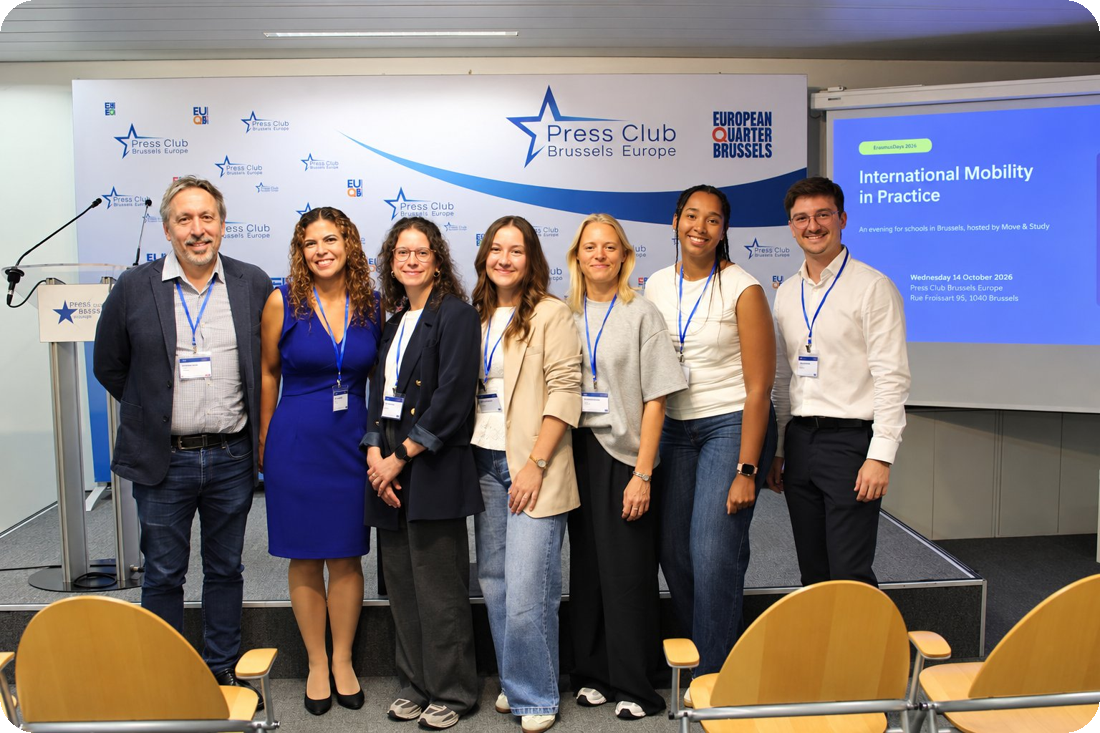
Erasmus+ for schools: where do I start?
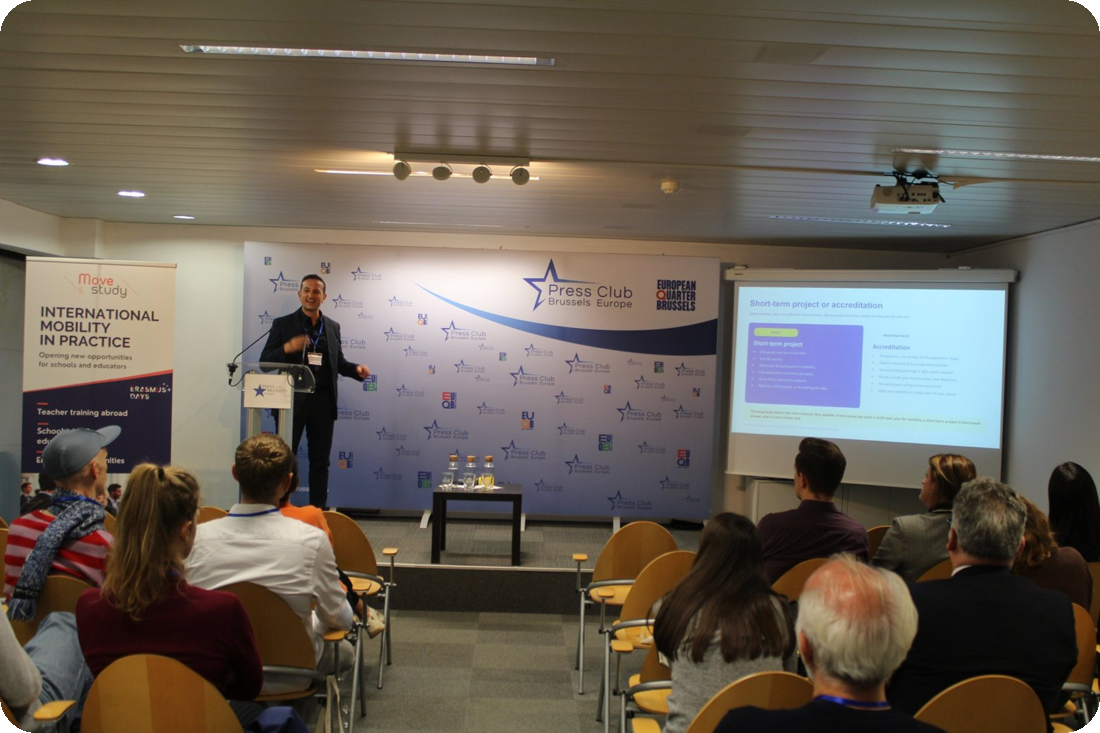
The evening opened with Libero Dachille, Erasmus+ Project Manager and founder of Lexema in Malta, who set out the practical route in for a school that has never applied. His first message was reassuring: Erasmus+ has two doors, and beginners should walk through Key Action 1, which lets a school send its own staff and pupils abroad without needing a partner school. Within it, a short-term project is the honest first choice rather than an accreditation, and a first project typically sits in the region of €20,000 to €25,000, with most of the grant paid in advance.
His advice on the admin was just as practical. Register the school in October, not in February, and above all pick up the phone to your National Agency, because they would far rather talk to you in November than reject you in March. Almost no first-time school does it, and the room took note.
Teacher training abroad: knowing a good course when you see it
Next, Aidan O'Shea, Director of The Linguaviva Centre in Dublin, explained how to choose a course worth the flight. His rule is to start at the end: what do you want to be able to do that you cannot do now? A good provider builds the programme with you well before departure, and he reminded us that a provider who agrees to everything is telling you something. He also shared a case study from Czechia in 2025, where art teachers came with one narrow need, CLIL strategies for art classes, and left three days later with lesson plans ready to use. The narrower the brief, the better the week.
The school trip iceberg: what parents do not see
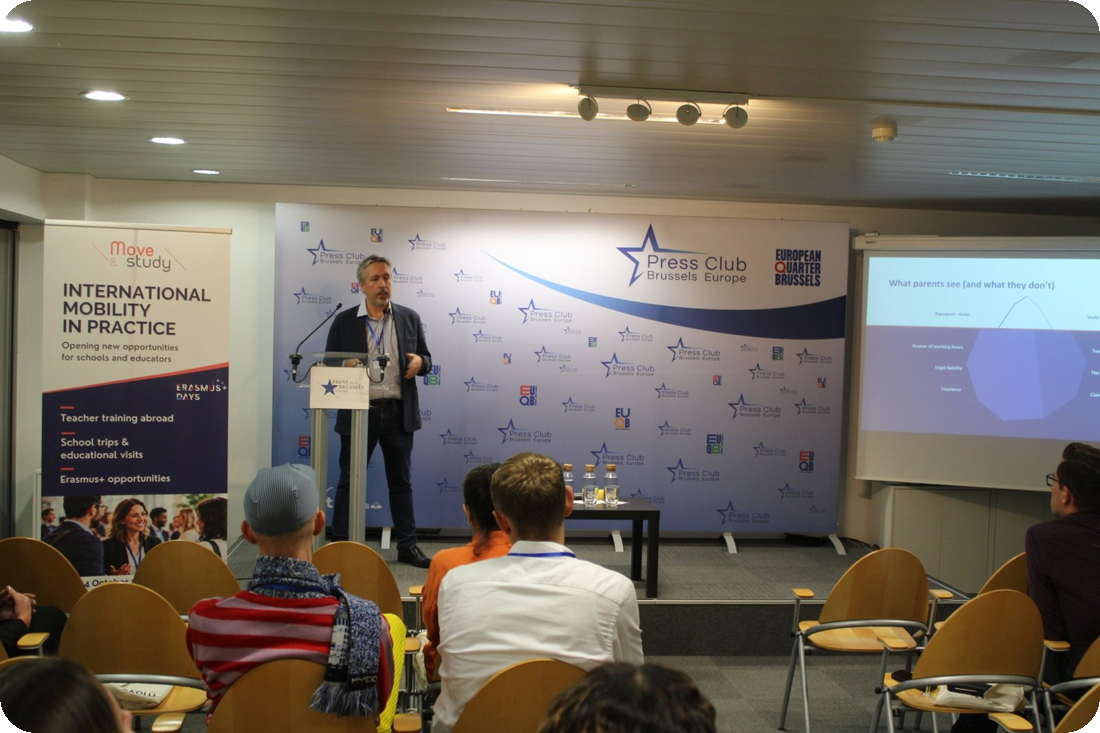
The final talk came from Laurent Potier, Director of Move & Study, who showed what sits below the waterline of a great school trip: around 60 hours of preparation for a single four-day trip, hidden budget lines, legal liability and insurance. Two real stories from 2025 made it concrete. A national strike closed Brussels Airport the day a group of 55 travellers was due to fly to Madeira, and a new plan was ready within 48 hours. In New York, twelve pupils and two teachers lost their seats on the return flight and needed a 24/7 line and constant follow-up to get home. His closing question stayed with us: who in your school will still be chasing an airline 18 months later?
Continuing the conversation: with On the Move
After the talks, the conversations carried on with plenty of questions about first applications, course choices and trip organisation. If you could not make it, the takeaways fit in four lines: choose a short-term project for a first application, register the school early, ring your National Agency, and write the need before the activities. Whether you are preparing a first Erasmus+ project or a school trip, the On the Move team, backed by the experience of Move & Study, is here to help. Get in touch to talk about your school's plans.